Here is a list of my 52 blessings. If I wanted, I could write at least a full page about each of them. Some probably require explanation, some are self-evident, others are misleading. I’ve decided I am going to leave them as is; unexplained.
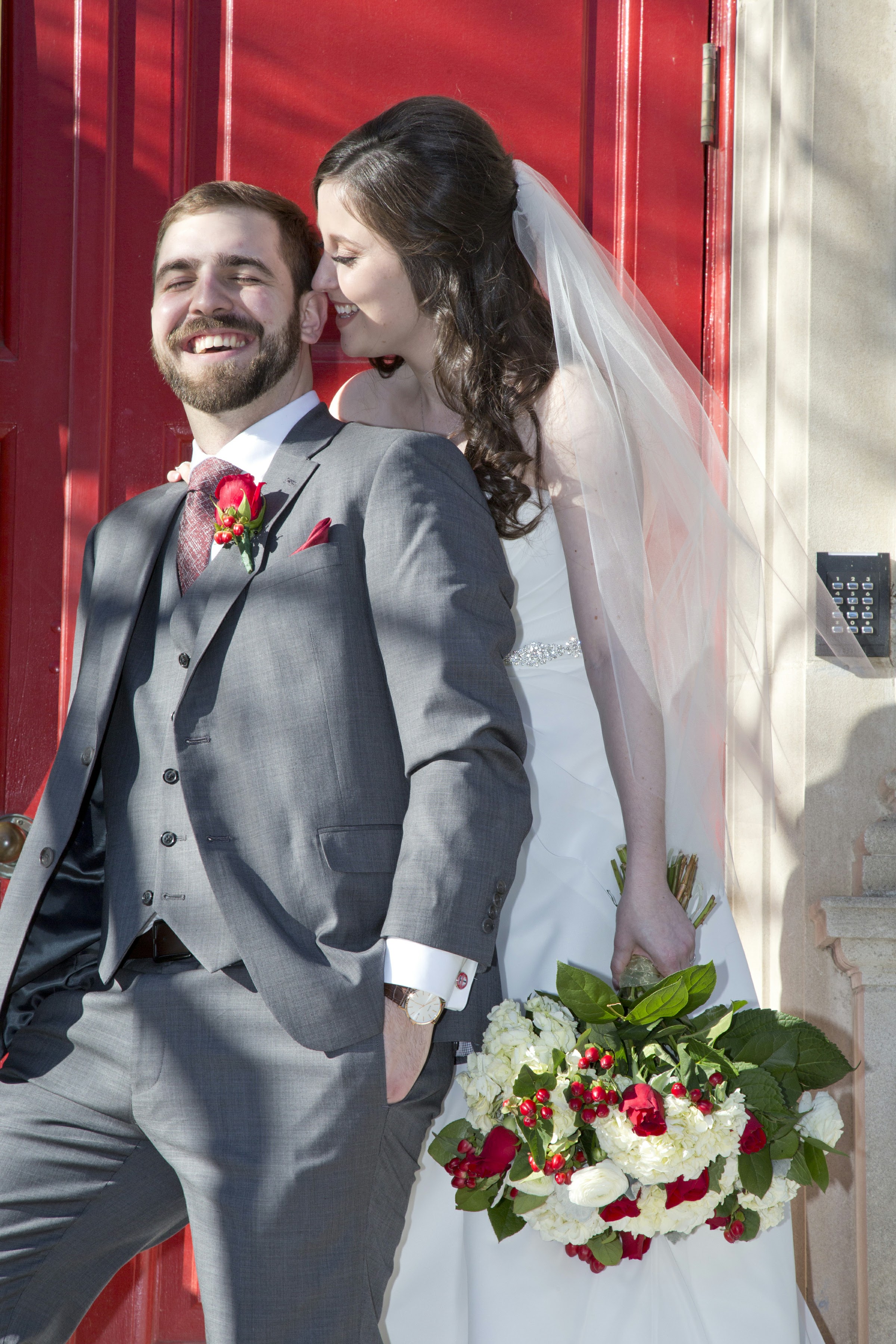
The support of my wonderful husband
My job
Public transit in my city
Our neighbours bringing our bins in
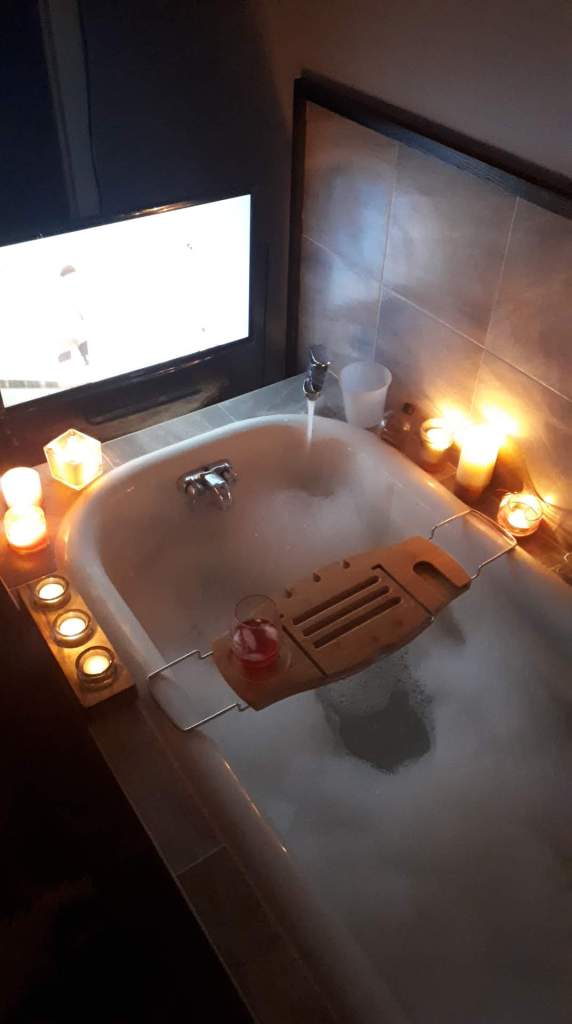
My bathtub
My Pilates class
The temperature control in my house
Being a homeowner
Our school debt being paid off
My years in musical theatre
Being raised with healthy and delicious food
My brilliant father
My massage therapist (and health benefits!)
Our disposable incomes
My bike
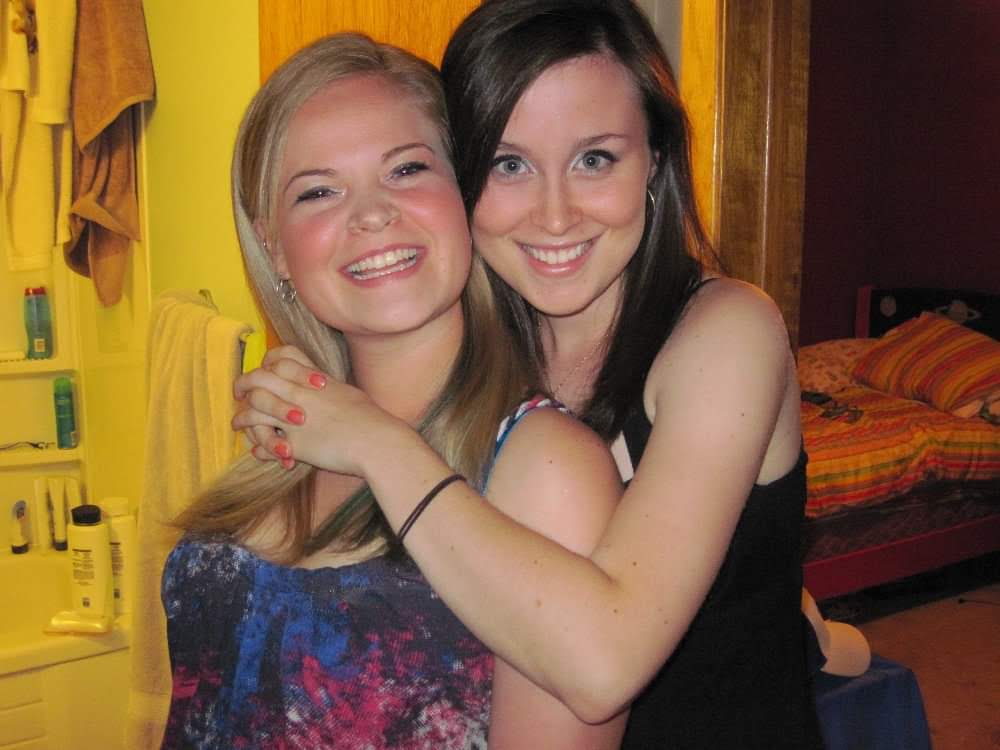
My friends
My education
My happy childhood
Travelling
My 2012 trip to France and Belgium
Our wine and whisky collection
All of my books and the time to read them
My father’s cooking
Being born in Canada
Our painting collection
Our years with L.C. the dog (and all dogs)
Our espresso machine
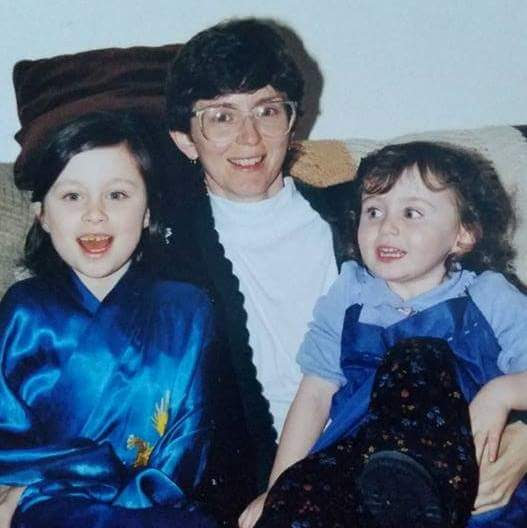
Thirteen years with my Mum
No food allergies
The humidifier in the bedroom
My therapist
A deep freeze full of food
A real Christmas tree every year
Living in a place with four seasons
The eucalyptus stream room at my gym
Podcasts
Classical music
My massage therapist storing my 18 ft canoe in her basement
Waking up in our own beds every Christmas morning
The memories my Mum’s siblings have shared with me
My health
My scoliosis
Wonton soup from Niagara Falls
My three different types of siblings (bio, step, in-law)
When I considered my challenge this week (“Count Your Blessings”), two thoughts began to circle through my mind. This should be relatively easy; I am employed, I own a home in a developed nation, I had a happy childhood (that’s at least four already). Then came the nagging doubt: because I thought this would be easy, maybe there’s a lot in my life that I am actually taking for granted.
#5. My Bathtub
Advice on the internet ranged from broad (count your blessings) to specific (write down three things you’re grateful for). I wanted to go beyond simply “food, roof, safety” and challenge myself a bit, so I set myself the task of listing 52 things I am grateful for – one for each week of this project.
Coming up with the first 18 was a breeze; they just flew out of my pen. Then I paused. In my excitement, I realized I was coming dangerously close to listing objects in my vicinity and writing down the names of all my friends and everyone in my family. While I am immensely grateful for the people and things in my life, I decided that for this to work, I need to be more intentional and less automatic.
#16. My Friends
So I put down my pen and decided to let them come to me slowly, like little bolts of lightning. Every hour or so for the rest of the day I would have an “ah ha!” moment, quickly fish out my pen and paper, and grin to myself as I wrote down another thing.
Later in the evening, I came home and sat with my husband, filling him in on my progress (I think I was at #32). Just being together and casually talking about our days helped me immediately fill in at least 10 more things. By the end of the night I had my 52, with more spilling out of my head (and mouth) every few minutes.
#26. Our Years with L.C. the Dog (and all dogs)
Each time I added something new, I re-read the entire list out loud from beginning to end. Something began to happen when I heard the words. Like a mantra, my disjointed list had a rhythm to it that was somehow both energising and calming. Reciting my gratitude imprinted a sense of joy, pride, and genuine happiness that grew as I continued reading. When I was finished, I read the completed list aloud to my husband. Sharing my happiness with another person expanded my sense of elation. Watching the recognition and affirmation form on his face as I made my way through turned my gratitude from idea to being. Sharing my gratitude somehow made it more real; something we could see and experience together.
Later on I thought about how I wrote my list and the instructions I had given myself. I believed my natural inclination would be to overthink and to develop some sort of system of rank and category. Instead, it came out like a conscious stream of thought; I let creativity win over structure. The incongruity of one item placed next to another continues to delight me and makes the practice of exploring my list even more enjoyable. Letting it live, unaltered, makes it feel more raw, real, and authentic.
The exercise of counting my blessings is one that I will continue to do over time. Perhaps every New Year, or during significant moments in my life: birthdays, holidays, changing seasons; times of sadness, loss, triumph, joy. When I stop being intentional, I am truly taking my blessings for granted. When I experience my gratitude and share my blessings, I am creating, cultivating, and experiencing Happiness.
Although this project came into being during the second week of January, I decided not to skip Week One for two reasons: to preserve my sense of continuity (and sanity!) and to give myself the chance to reflect a little bit about the holidays we’ve just endured. So, for the first of my 52 “ways”, I selected a list item that was easy enough, and yet so ubiquitous that I’ve been practicing it for as long as I can remember. The item in question appeared simply as “Smile” on two of my happiness lists, and as “Act Happy” on a third. Indeed, psychological research suggests that smiling can make an otherwise unhappy person begin to feel slightly better. However, one list didn’t leave it at that. In the small explanatory blurb, the author continued with the following: “…if you’re smiling, other people will perceive you as being friendlier and more approachable.”
Let’s break this down simply (bear with me here, I’ll find the point eventually):
Premise one: Smiling can make a sad person feel slightly better (Fake it ‘till you Feel It) Premise two: If you smile, you’ll make other people more comfortable.
Now I’ll say right now that I agree in the simplest form with both of these premises. Perhaps, however, the knot forming in my stomach as I consider the implications of “Act Happy” is not so surprising, as I write this fresh from the Christmas holidays; a time that is, to put it mildly, somewhat emotionally fraught.
I consider myself to be a “bewildered empath”; I understand emotions but I am often confused by behaviour. I am very attuned to the moods of those around me and, perhaps to the frustration of all involved, I tend to read volumes into the smallest micro-expression. I discovered, for instance, that shortly after my mother died in the fall of 2004, a simple toothy smile could ease the look of desperation on my father’s face. Showing him that I was happy seemed to make him happy. Sometimes the smile was genuine, sometimes it was forced: fake it ‘till you feel it.
In the years since, I have altered and adapted this strategy. What began as a reassuring glance has turned into an emotionally exhausting performance that, while considerate to those around me (close family and friends), has begun to slowly erode my sense of self. I stopped sharing my sadness. Outside of my own home, I stopped allowing myself to outwardly express anything but positive emotions. I stopped sharing the burden, because I thought that if I carried my own, my family would have less to lift; I would be one less thing to worry about. As it turns out, smiling through the pain is only beneficial if you have been honest about the pain in the first place, with yourself and others.
I stopped sharing the burden, because I thought that if I carried my own, my family would have less to lift…
So what does all of this mean? Should I take the list literally and smile through the tears at whatever cost? I am unsure. Should I say “screw it” and publicly wallow in my misery? Probably not. Do I regret not sharing my true self with those closest to me? At this moment, on the morning of January 9th, I’ll allow for a tentative “yes”. Breaking a lifelong habit is difficult, if not outright traumatic. To let people in when they’ve always been kept out, to shatter the facade of uncomplicated happiness is a terrifying process that I know will leave me feeling afraid and vulnerable. But I believe that to experience true “capital ‘H’ Happiness” (the point of this whole adventure), I need to feel (and share) both the happy and the sad.
One day I looked up “how to be happy” and this is what I found…
It’s a helluva start, being able to recognize what makes you happy.
— Lucille Ball
Ever find yourself wondering how could you be happier? Have you looked for a “how to” guide, or perhaps a list or two? Have you ever, in a moment of desperation or curiosity, turned to the internet for answers? Well, you’re not alone, because that’s exactly what I did as I stared down the barrel of a new decade. Philosophers, writers, and therapists can’t agree on what happiness is, yet we are all trying to find it, whatever it is. I’m not a scholar of happiness, just a curious person who loves to find, read, and create lists.
So what did I do? I found lists. I found hundreds of lists. Habits, tasks, behaviours, mindsets, and attitudes, all claiming to make me “happy”. From “have a bubble bath” to “avoid negative thoughts” (gee, thanks), bloggers, writers, academics, and your average humans have all contributed to the collective search for happiness.
So, I found the best, most interesting, most ridiculous, and most personally challenging lists and dropped them all into a spreadsheet (my love of lists most certainly extends to the wonder that is Microsoft Excel).
Eventually the wisdom of the internet started to become a tad repetitive, so I narrowed my results down to five key lists. This is by no means an exhaustive survey of all relevant literature and scholarship on happiness (I do have a full time job) but I decided that I wanted to focus on things that just about anyone can do, regardless of budget (therapy, while undeniably powerful, can get pretty pricey!).
Then I had to figure out a plan.
Being that this January marks the beginning of a brand new decade (New Year, New You and all that) I thought that I’d give myself the year to figure out how to be “happy”. I took all the lists, removed all repeats (who would have thought that “go outside”, “get some sleep”, and “have a nap” would appear across the board!) and condensed my list to 52 ways to be happy: one new way per week.
So join me, as I figure out “how to be happy” in 52 weeks, 52 ways, and a whole lot of thoughts!
I’m an over-thinker, I’m a list maker, and I’m trying to figure out how to be happy.
I started this journey because I’ve always wanted to write…something. I have pages and pages of half-finished thoughts, book ideas, and incomprehensible scribbles. So this year, as a sort of resolution, I have decided to join the masses and put my thoughts out there, on the internet, for anyone (someone?) to read.
Why am I doing this, really?
I love to try new things (I once had a thesis adviser call me “delightfully all over the place”) and I get excited by new ideas very quickly. I’m a researcher by education and I love diving deep into the rabbit holes of the internet, academia, and really any topic that grabs my attention. I love to learn, I love to share, and I love to try and figure out how to make myself a better, happier, and slightly more high-functioning person. So, naturally, I picked the question that philosophers across continents and centuries have struggled to answer: what is happiness and how can I get some? (Okay, so not the exact question).
I think there is “big” Happiness (let’s call it capital “H” happiness) and “small” happiness. Happiness on a cosmic, holistic, transcendental scale, and, let’s say, the happiness of a moment; of seeing a friend (photo), watching the clouds, sharing a joke. Can happiness lead to Happiness?
Armed with the conviction that the most important journeys are often the hardest, I’ve decided to turn happy into Happy by mindfully adjusting my life, one week at a time, for 52 weeks. There will be pitfalls, failure, hilarity, and sadness, but I’ve decided to let myself be okay with that. And I hope you can, too.




 How to Be Happy