Think what a better world it would be if we all, the whole world, had cookies and milk about three o’clock every afternoon and then lay down on our blankets for a nap.
– Barbara Jordan
If you asked me before this week, I would have told you that there are exactly two kinds of adult nap: purposeful and accidental. Taking a 20 minute power nap in the middle of the day? I meant to do that. Falling asleep in the middle of a movie (or, God forbid, Zoom meeting)? Whoops.
I would have also told you that I am most emphatically not a napper. I’ve always been very jealous of people who seem completely refreshed after a short snooze – accidentally or on purpose. My husband is one of those people. The jerk had an accidental nap this afternoon while we were watching a soccer game on TV. (I noticed because he had stopped answering me and eventually started snoring). Did he mean to do that? Nope. Did it negatively impact him in any way? Of course not. As always, he seemed extraordinarily pleased with himself and, somehow, in an irritatingly better mood.
When I wake up from a nap, on the other hand, I feel lost, disoriented, mysteriously ill, and in desperate need of a calendar and the exact time before I can rejoin the world. An accidental nap is the single most disruptive thing I can do to myself, so why on earth would I do it on purpose?
That brings me to this week, when I have apparently set myself the improbable task of taking a power nap. Intentionally. Everything I’ve experienced in my life up to this moment suggests that taking a nap will decrease my happiness – at least temporarily. But I’m open minded, so what the hell.
Ever the nap skeptic, I decided to do some poking around on the internet to see what the science says about napping and happiness. I was particularly interested in the “How To” section because, apparently, I’ve been napping wrong for the better part of two decades.
Why We Nap: A Guide for the Modern Non-Infant
It turns out that there are quite a number of benefits of napping on purpose. Evidently, a carefully crafted nap can improve your mood, memory, and creativity; heighten mental and physical performance; decrease fatigue and stress; and, increase relaxation, alertness, critical thinking, heart health, and career success.
Okay, so I’ve experienced exactly none of these alleged benefits. Am I unlucky or am I just doing it wrong?
There are some drawbacks to napping, but the list is much shorter. There is a possibility that you will experience sleep inertia – the feeling of grogginess and disorientation (Ding! Ding! Ding! We have a winner!), or that napping will induce nighttime sleep problems. The latter is brought on by napping too much or too long, but I could find absolutely no explanation for sleep inertia. Just unlucky, I guess.
“Nappiness” (I know, *Cringe*)
The napping benefit of particular interest to me is, of course, the possibility that napping can make me happy. I learned, amid some etymological confusion, that there is actually a word for that. According to The Independent (so take this with a grain of salt) the state of satisfaction that results from a nap is often called “nappiness”. I’m going to go right ahead and put that term back where I found it and promise that this is the last time I’ll use it.
Questionable editorial practices aside, there have been some actual studies connecting regular napping and increased happiness. A survey of 2,000 Americans found that nappers are more likely to self-identify as happy (90% to 79%). Research from the University of Hertfordshire suggests that a nap under 30 minutes can make you more focused, productive, creative, and – yes – happier. One particular study asked 1,000 participants about their napping habits and then assigned each a “happiness score”. Those who napped had an average score of 3.67 (out of 5) compared with an average of 3.52 in non-nappers, and 3.44 in those who took long naps. Is that where I’m going wrong? Are my naps too long?
Fantastic Naps and How to Do To Them
For those keeping score, I have now learned that I am clearly afflicted with sleep inertia and am apparently putting my health and happiness in jeopardy by either not napping at all or napping for too long. Whatever it is I’ve been doing, I’ve clearly been doing it wrong. So, what is the right way to nap?
Back before I opened Pandora’s Box of napping, I believed there were two kinds of nap: accidental and purposeful. It turns out there are between 5 and 10 varieties of nap, depending on who you ask.
Psychology Today put together an astonishing list of 9 different types of naps which I have paraphrased here:
The CEO Nap
Why: Will boost daily energy, focus, and mental performance (all very CEO things)
How: Short (can’t keep the shareholders waiting). Twenty-five minutes at the most, aiming for between 1-3PM.
The Nap-A-Latte
Why: A pick-me-up when coffee alone just doesn’t cut it anymore.
How: Drink 6-8oz of coffee very quickly (the article even suggests putting ice in it, so they really do mean fast), then find a quiet place and lie down for 20 minutes. You wake up just as the stimulant effect of the caffeine kicks in.
The New Mom (or Dad) Nap
Why: Because you clearly haven’t slept in weeks.
How: Sleep when your baby is sleeping.
The Sports Nap
Why: To increase sports performance and deliver immediate physical and mental benefits.
How: Sports drink and a quick 15-20 is all you need.
The Disco Nap
Why: To prepare for a late night of partying, of course!
How: Take a whopping 90 minute nap before you hit the disco. (Can also be combined with the Nap-A-Latte).
The Siesta
Why: Because that’s the way we’ve always done it (sadly, the majority of North America excepted).
How: Dim the lights and close the shop around 2:30 every day.
The Shift Work Nap
Why: Because shit work (i.e. being awake and active when you’re meant to be asleep) can be bad for your health.
How: A short nap before the shift begins and/or napping on short breaks during shifts.
The Teen Nap
Why: Because their biological clock is messed up and they’re chronically sleep deprived because we force them to get up stupidly early for school (which is probably why they’re grumpy all the time).
How: A short 20-minute nap after school and longer naps on the weekends.
The Jet Lag Nap
Why: Because time change is hard. Reduce jet lag and keep energy up to navigate an entirely new time zone.
How: Do your best to adopt the schedule that fits your destination time zone. Sleep when the locals sleep.
So, this blows my two completely out of the water. While many of those don’t apply to me (as a childless, 30-year-old, non shift worker) these nine whimsical naps can fit into a slightly more scientific-sounding list of five types of nap, according to the Sleep Foundation.
Recovery Nap (incl. “New Mom/Dad and Teen Nap): Recover from sleep deprivation or, as we colloquially say, “catch up on sleep”.
Prophylactic Nap (incl. Disco and Shift Work) To prepare for sleep loss.
Appetitive Nap (incl. CEO, Nap-A-Latte, Sport, Siesta): To relax, improve your mood, increase energy levels, or simply for the love of napping.
Fulfillment Nap (incl. Whatever the baby is doing while Mom naps?): Because kids just need more sleep than adults.
Essential Nap (incl. Jet Lag): To “sleep it off” when you are sick.
At this particular stage in my life (non-baby, non shift-worker) I’m most likely to need the rare “Essential Nap” for travelling and cold-and-flu season, the occasional “Recovery Nap” for preparing for or recovering from drinking too much, and, most often, the optional “Appetitive Nap”. While the others seem biological necessary, all sleep in the nap-for-fun genre seems focused on the elective benefits of higher energy and happiness. Seems like a win/win.
But if I’m going to do this, I’m going to do it right. Because I’m not touched by the angel of sleep like my dear husband, I will not leave my napping to chance or accident. So how does one nap?
Keep it quick: aim for a 10 to 20 minute Power Nap. The longer you nap, the more brutal the sleep inertia.
Stick to the early afternoon: napping after 3pm can mess with bedtime.
Create a restful environment: look for a quiet, dark place with a comfortable temperature (around 65 degrees F) and few distractions.
Set an alarm: don’t accidentally sleep for three hours if you want to be a functioning human when (and if) you wake up.
Set aside your worries: while this is easier said than done, stressing out will keep you awake. Ignore the never-ending to-do lists in your brain and try doing some relaxation exercises.
Ask yourself why you’re napping: when you have sorted out what you want to get from the experience, you can plan the perfect nap to fulfill your goals. (Or, perhaps, establish the need for medical intervention).
Yawn or: How I Learned to Stop Worrying and Love (or tolerate) the Nap
After overthinking to an impressive (and unproductive) degree, I eventually narrowed my research into a very brief mission statement, as it were, and one or two useful guidelines to make the most of my week of napping.
This week, in an effort to increase my personal happiness, I will designate time to have one or two intentional, 20-minute naps in my dark, temperature-controlled bedroom.
Nap #1
After work on Monday, my husband and I were laying side-by-side on the bed, chatting about our day, when the conversation naturally hit a lull. While somewhat spur of the moment, I decided to make the most of the situation. I was planning on heading to the gym around 6pm so I figured this would be a good opportunity to test-drive the Sports Nap. I set an alarm on my phone for 45 minutes, put on my eye mask, and curled up in bed. Yes, I broke pretty much every single rule I’d just set out to follow. My nap was late in the day, it was significantly longer than the recommended 10-20 minute power nap, and I’d argue that having another person inches from your face is a bit of a “distracting environment”. But you know what, it ended up actually being a pretty good nap! I was tired, I set a time limit, and I had plans for later in the evening so I knew that the snooze button wasn’t an option. The biggest difference between this nap and virtually every other time I’ve fallen asleep at a strange time? This time I did it on purpose!
Nap #2
It was God-knows-what day of the week, I’d slept very poorly the night before, and by 10:30am I’d hit a wall. I decided that I would use half of my lunchtime to take a Recovery/CEO/Siesta Nap. At 12:01, I crawled under the covers, set the alarm, lowered the eye mask, and immediately fell asleep. When the alarm went off 20 minutes later, I slowly opened my eyes, yawned, stretched, and said a prayer of thanks to the Work From Home gods before heading to the kitchen to make some lunch. I had desperately needed that nap and, contrary to any of my previous assumptions, that little bit of planned mid-day sleep was exactly what I needed. I finally got a glimpse of the blissful contentment that everyone in my life is constantly going on about.
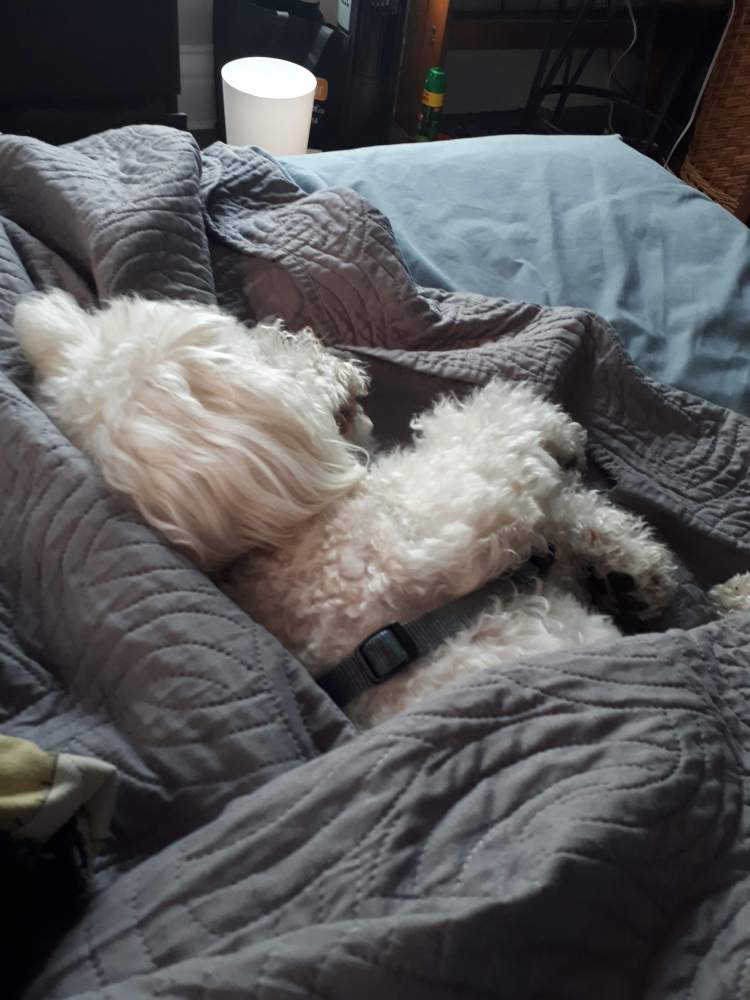
On Wednesdays We Nap
Am I a napper now? Despite this recent bit of success no, I don’t think I can see myself as a life-long napper. I woke from my snooze this week with a sense of purpose and accomplishment – I set a goal for myself and I achieved success – but behind that was the ever-present sleep inertia that required a firm hand (and deadline) to shake. Does napping make me happy? I think the better question is how does napping fit in with the other causes of my happiness? When I sat down and learned about the benefits of napping and later when I lay down and applied them in practice, I discovered that a lot of these “benefits” are not exclusive to napping, and are predicated on other determinants of health and happiness. As I always have, I can really take or leave the nap. Getting six to eight hour of of regular sleep, eating well, and exercising regularly can improve my memory, mood, and critical thinking skills. The same goes for the rest of the list of benefits. With very few exceptions, napping for me is Appetitive – or optional. My first nap made me happy because I accomplished it but, most importantly, because I shared it with someone I love. My second nap was necessary because I was a trainwreck from the night before and, while it allowed me to finish my day, I didn’t actually experience joy.
I am not a convert, but I now know more than I ever thought I would about the man having a cat nap next to me. The blessed goofball can sleep whenever, however, and wherever, and wake up to the best day/half day/evening of his life. For me to get the most out of my nap – or to experience the least amount of negative impact – I have to carefully and patiently set a clear intention. After all, for me, napping is no happy accident.
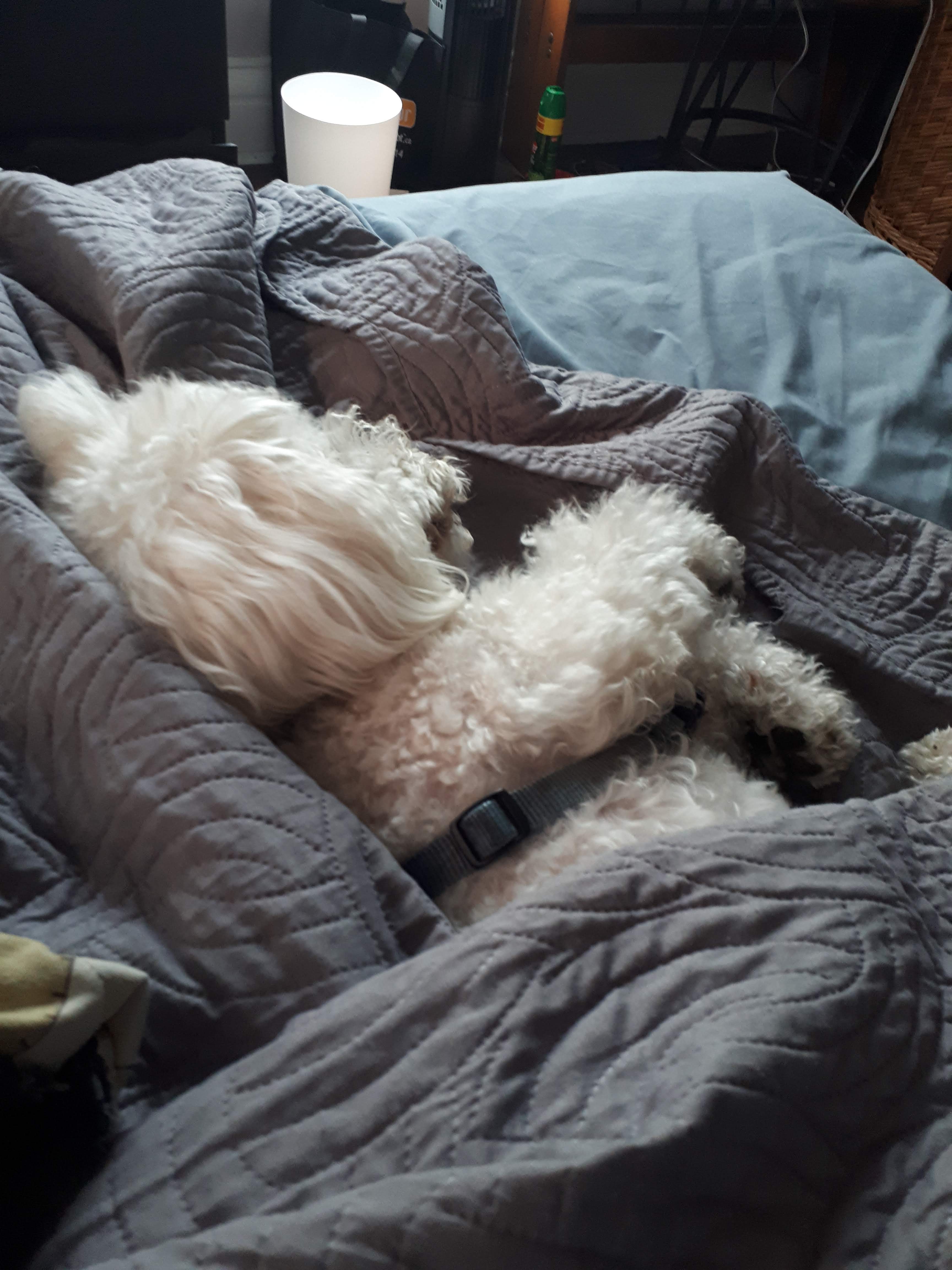
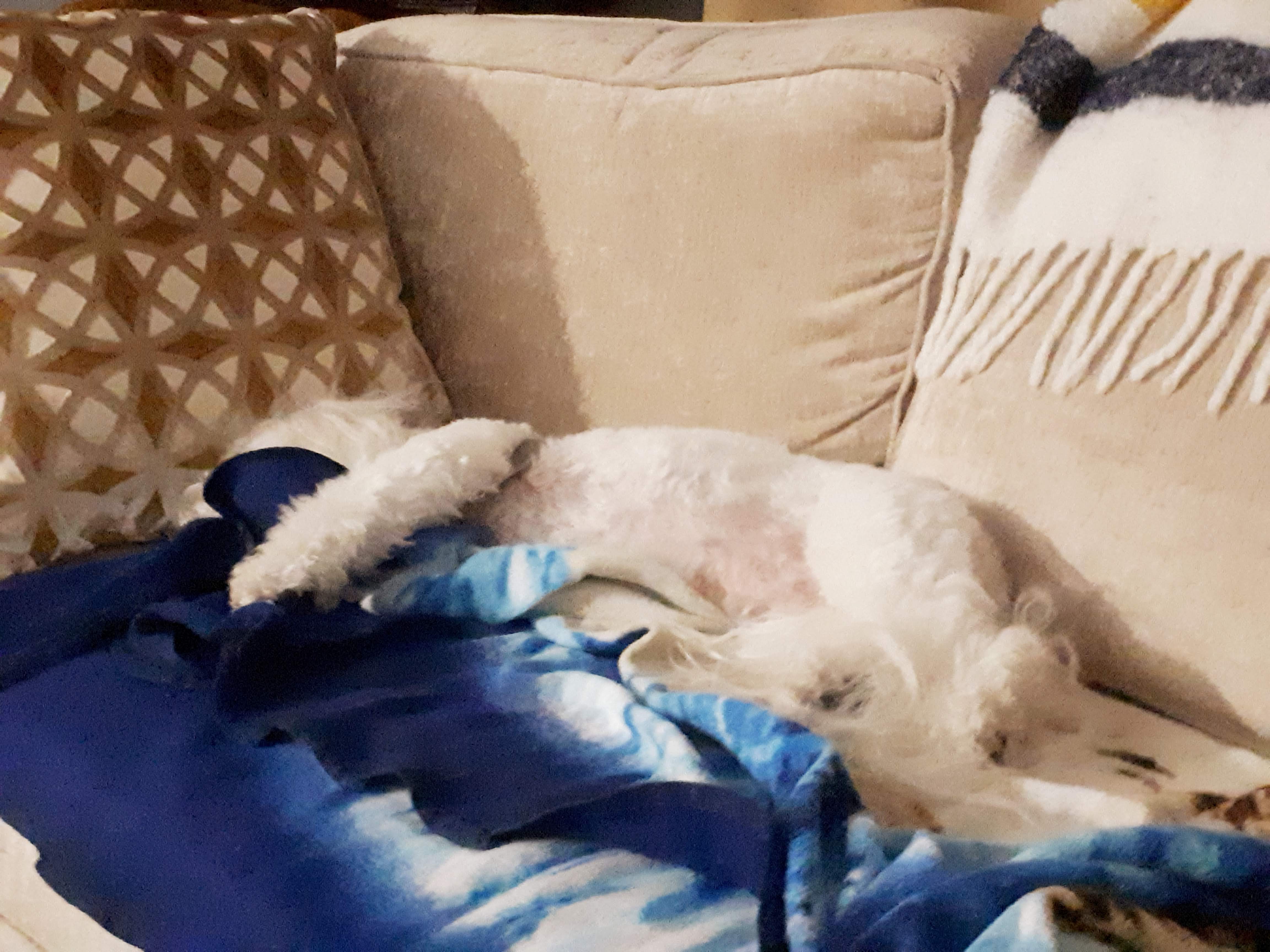
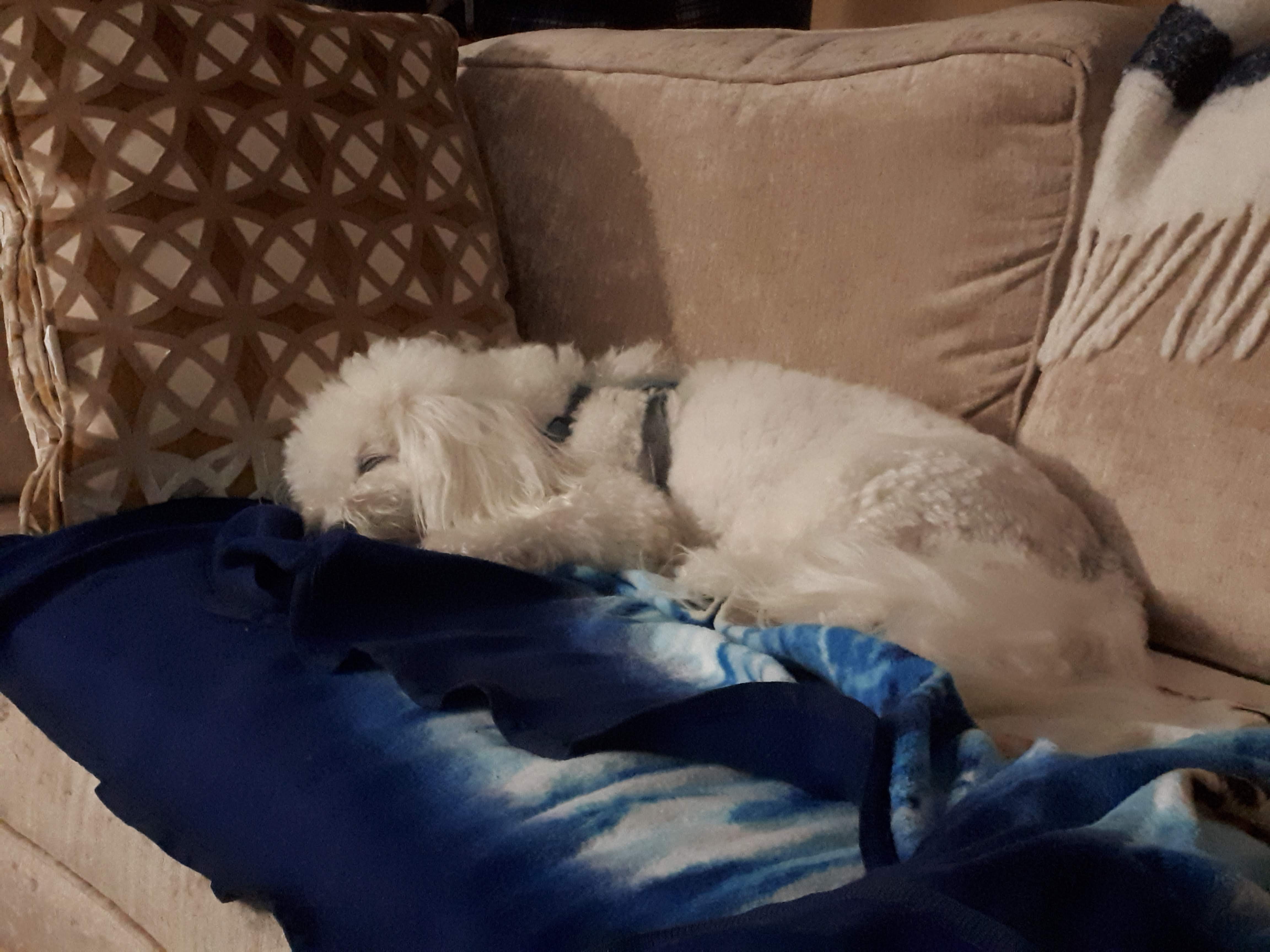
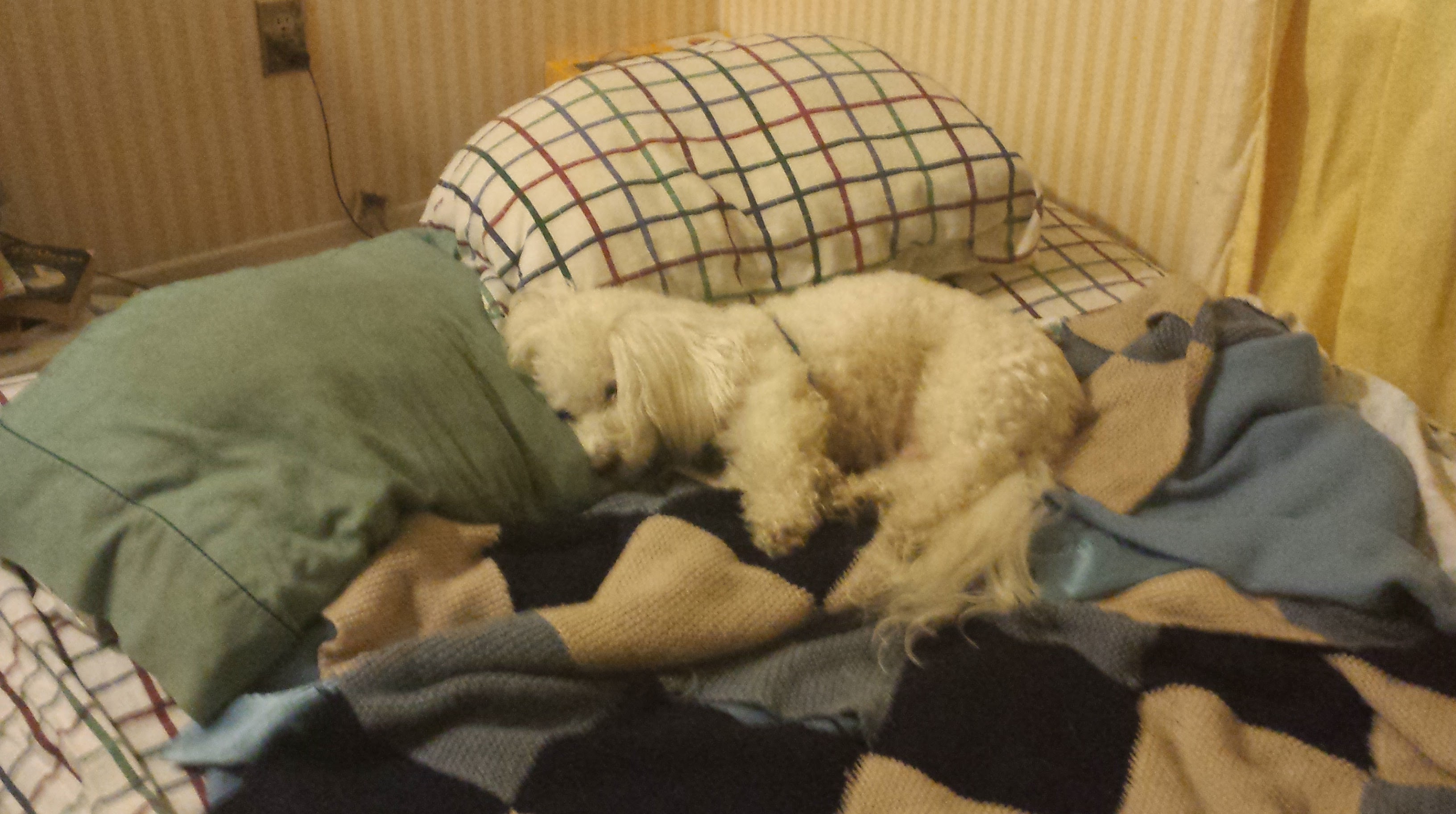
To save the embarrassment of all humans involved, please enjoy an album of LC the Dog having a nap.


Sources
45 Things You Can Do to Get Happy No Matter Where You Are
Courtney Johnston | @CourtRJ | ( http://www.rulebreakersclub.com/) on Lifehack.org
48 Little Things You Can Do to Make Yourself Happier Now
Elyse Gorman | @notesonbliss | ( https://elysesantilli.com/ ) on Thought Catalog
9 Different Types of Naps and their Advantages | Michael J. Breuss | Psychology Today
Health Benefits of Napping | WebMD
Napping Do’s and Don’ts for Healthy Adults | Mayo Clinic
Napping | Sleep Foundation
Short Naps Will Make You Happier, Reveals Study | The Independent
Survey: People Who Nap Regularly More Productive, Happier Than Non-Nappers | Study Finds
 How to Be Happy